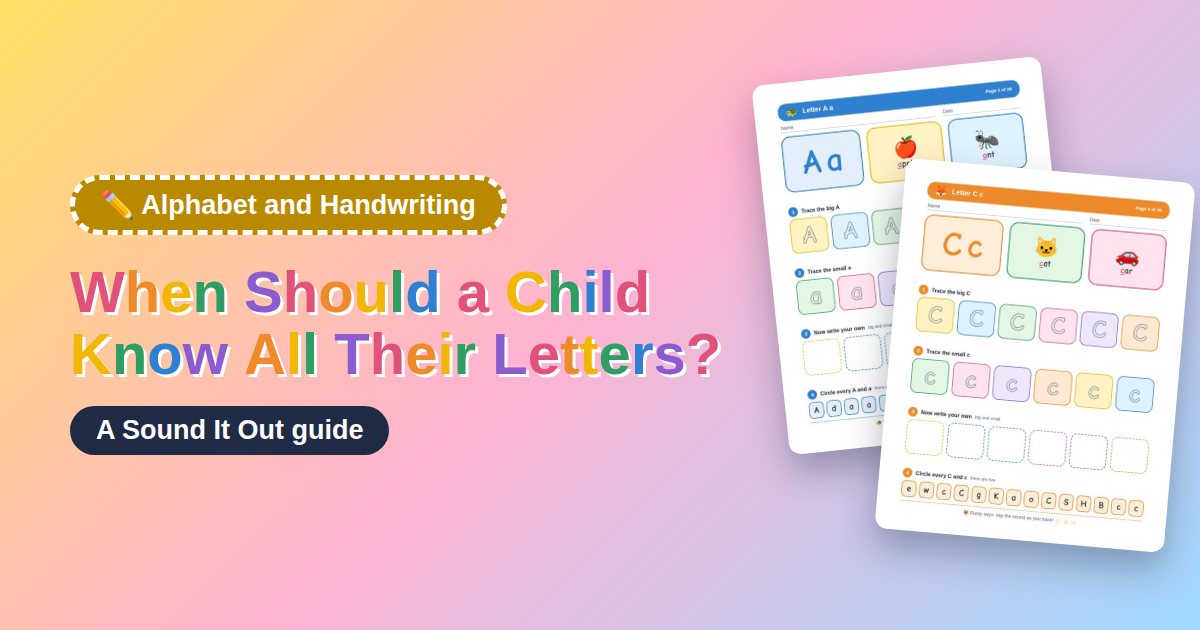
Most children learn all 26 uppercase letters by the end of kindergarten, around age 5 or 6. Lowercase letters often take a bit longer, since some lowercase letters look very different from their uppercase form. Children differ in how fast they learn letters, so do not worry if your child needs more time or more practice.
The Typical Timeline for Learning Letters
Many children start recognizing a few letters by age 3, often the letters in their own name. By age 4, most preschoolers can name several letters, especially uppercase ones. By the end of kindergarten, most children know all 26 uppercase and lowercase letters and the sounds they make.
Lowercase letters usually take longer to learn than uppercase letters. Letters like b, d, p and q can be tricky because they look similar. This is normal and does not mean your child has a learning problem.
Uppercase Letters Usually Come First
Uppercase letters are often easier for young children to learn first because they are used in their name and in books. Many preschool programs teach uppercase letters before lowercase letters for this reason.
Once your child knows most uppercase letters, you can start matching them to the lowercase form, one pair at a time.
What to Do if Your Child Is Behind
If your child is in kindergarten and still mixes up several letters, this is common and usually just needs more practice. Focus on a few letters at a time instead of all 26 at once.
Use short, daily practice sessions instead of long ones. Five to ten minutes a day works better than one long session once a week.
Simple Ways to Practice at Home
Point out letters during everyday activities, like reading cereal boxes, street signs or picture books. Ask your child to find a certain letter on the page.
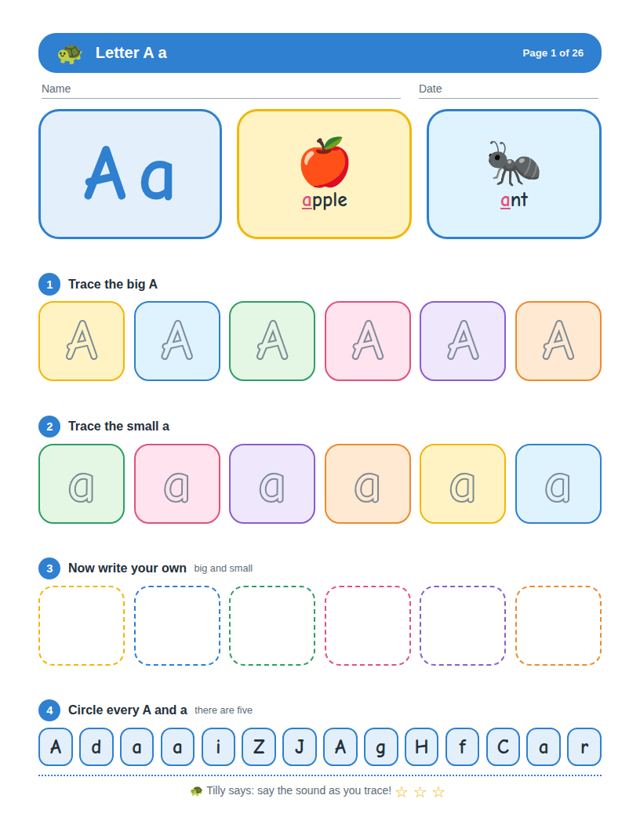
Trace letters in sand, shaving cream or with a finger on a table before using a pencil on paper. This helps build the hand movements needed for writing.
Quick tips
- Practice one or two new letters a week instead of all 26 at once.
- Say the letter name and its sound together, such as 'B says buh'.
- Use your child's name to teach the first few letters, since those matter most to them.
- Keep practice short and end before your child gets tired or frustrated.
- Celebrate small wins, like recognizing a letter in a new word.
 ✏️ Alphabet and HandwritingHow to Teach a Child to Hold a Pencil
 ✏️ Alphabet and HandwritingMy Child Mixes Up B and D: What to Do
 ✏️ Alphabet and HandwritingWhat Age Can a Child Cut Shapes and Glue Accurately