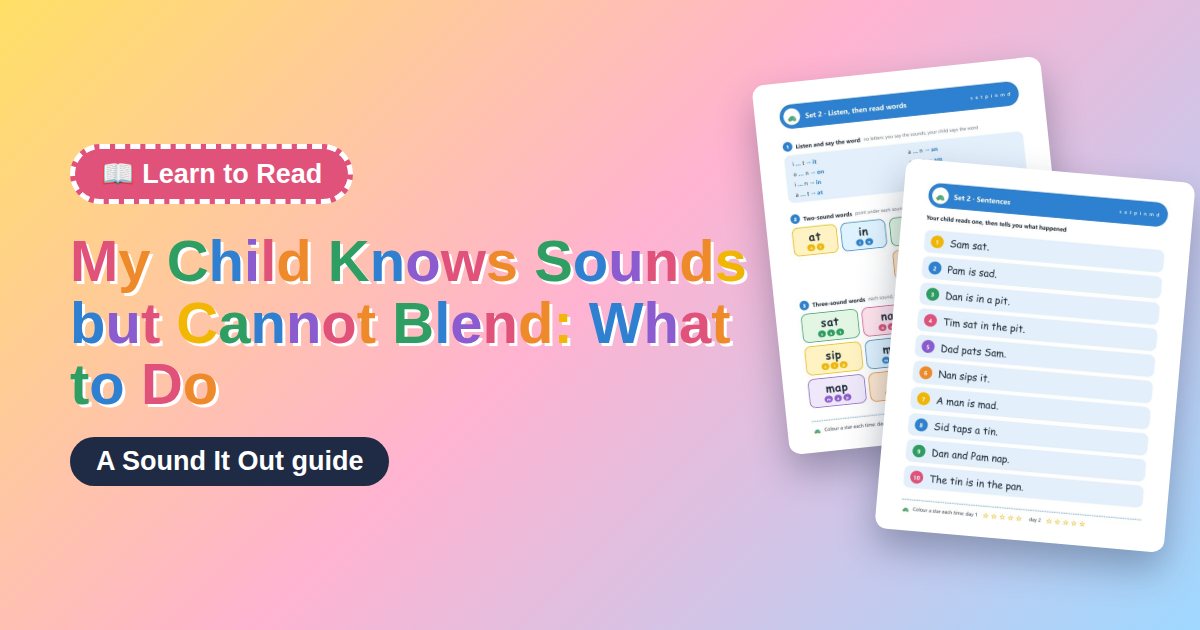
Knowing letter sounds but not blending them is one of the most common steps in learning to read. Blending is a separate skill that takes practice, not just sound knowledge. This week, slow down the sounds, blend only two or three letter words, and use your voice to slide the sounds together instead of saying them one by one.
Why Sounds and Blending Are Different Skills
Knowing that the letter m makes the sound 'mmm' is one skill. Holding that sound in mind while moving to the next sound, and then the next, without losing the first one, is a different skill. This is called blending, and it takes its own practice. A child can know every letter sound perfectly and still need time to learn to blend them.
Slow the Sounds Down, Then Speed Up
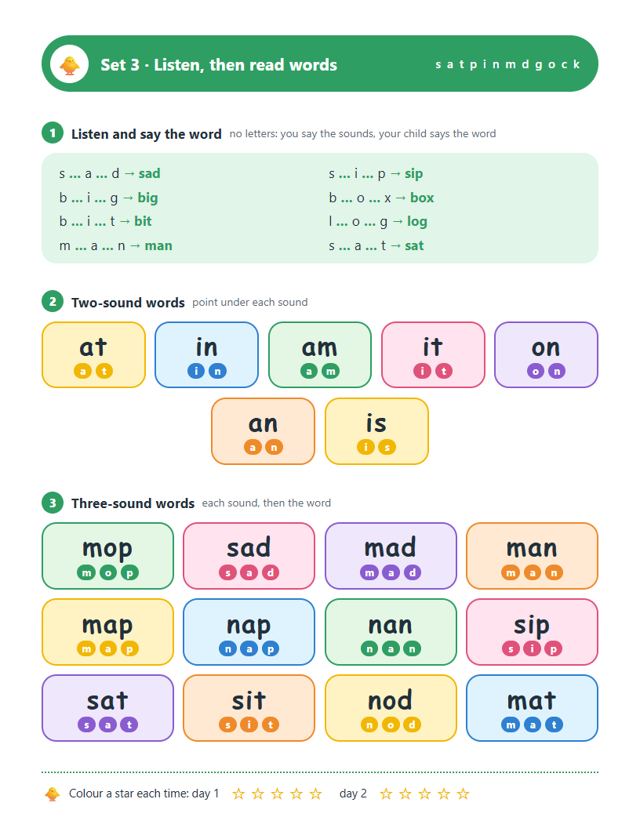
Say each sound in a short word slowly, stretching it out: 'ssss-aaaa-t' for sat, then say it faster: 'sat.' Model this first, then let your child copy you. Start with words that have sounds that can stretch, like s, m, f, and a, before words with sounds that stop short, like b, d, and t, which are harder to stretch.
Start With Very Short, Simple Words
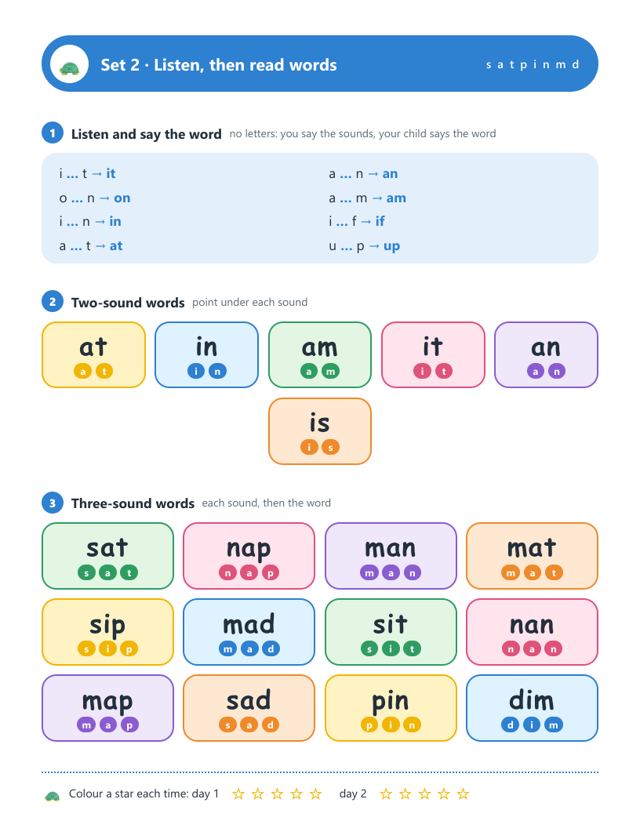
Use real three-letter words first, such as cat, sun, map, and hop. Avoid long words or made-up words at the start, since the goal is to build the feel of blending, not to test memory. Once two or three letter blending feels easy, move to four-letter words like stop and fast.
Use Your Finger or a Sliding Motion
Point under each letter as you say its sound, then slide your finger under the whole word as you blend. Some children blend better when they move a finger, a counter, or even their own hand along the word, rather than sitting still and just looking at the letters.
Keep Sessions Short and Low Pressure
Blending takes repeated, short practice more than long sessions. Five to ten minutes a day, with a handful of words, works better than one long session once a week. If your child gets frustrated, stop, do something else, and come back to it later the same day or the next day.
Quick tips
- Blend only two or three sounds at a time before adding more.
- Choose words that start with stretchy sounds, like s, m, or f.
- Model blending out loud before asking your child to try it alone.
- Avoid rushing: blending gets faster naturally with practice, not with pressure.
- Celebrate small wins, like blending one new word, to keep motivation up.
 ✏️ Alphabet and HandwritingHow to Teach a Child to Hold a Pencil
 🔷 Shapes, Time and MoneyHow to Teach a Child to Tell Time
 ✏️ Alphabet and HandwritingMy Child Mixes Up B and D: What to Do