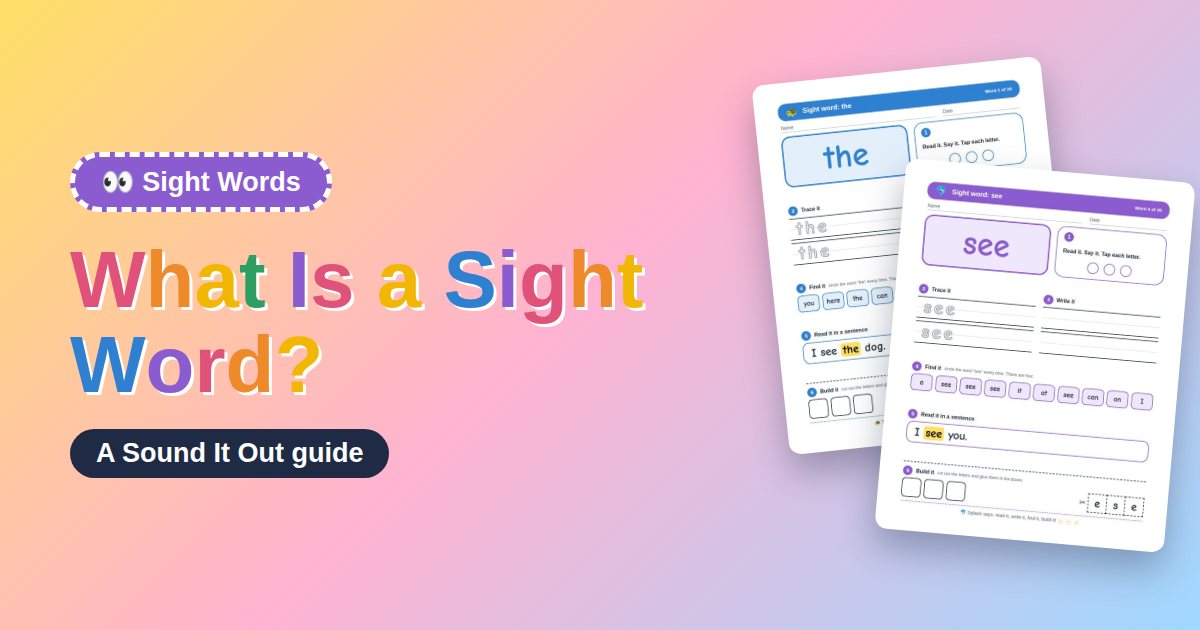
A sight word is a word that a child learns to recognize by sight, without sounding out each letter. Many sight words, like 'the', 'said' or 'was', do not follow regular phonics rules, so children memorize how they look and sound. Learning sight words helps children read common words quickly and understand sentences.
Why Sight Words Are Different From Other Words
Most words can be sounded out letter by letter using phonics rules. Sight words often break these rules, so sounding them out does not work well. For example, the word 'said' is not spelled the way it sounds.
Because of this, children learn sight words by looking at the whole word, saying it, and repeating this many times until they recognize it right away.
Why Sight Words Matter for Reading
Sight words make up a large share of the words in children's books and early sentences. Words like 'the', 'and', 'is' and 'you' appear again and again.
When a child knows these words by sight, reading becomes smoother and faster. This leaves more attention for sounding out new or harder words in the sentence.
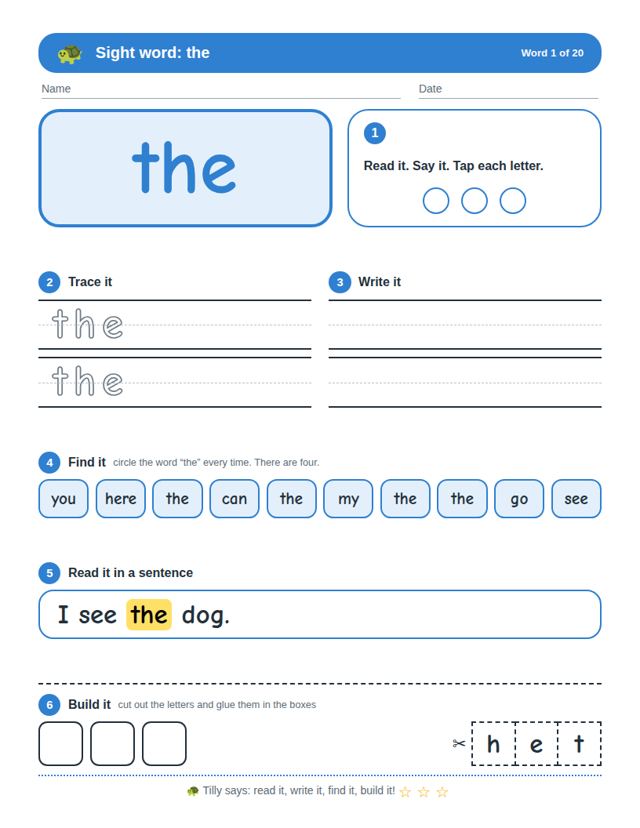
How Children Learn Sight Words
Children usually learn sight words through repeated practice, such as flash cards, word lists, or seeing the same word in many books. Seeing a word often helps it stick in memory.
Many schools teach sight words in small groups, starting with a short list in kindergarten and adding more words through first grade.
Sight Words vs. Phonics Words
Phonics words follow regular spelling patterns, so a child can sound them out, like 'cat' or 'hop'. Sight words often do not follow these patterns and need to be memorized instead.
Most reading programs teach both skills together. Phonics helps with new words, and sight words help with common words that show up everywhere.
Quick tips
- Practice a small number of sight words at a time, such as five words a week.
- Use flash cards and point to the word while saying it out loud.
- Point out sight words in books you read together.
- Review old sight words often so your child does not forget them.
- Keep practice short and fun, since memorizing words can feel repetitive.
 ✏️ Alphabet and HandwritingHow to Teach a Child to Hold a Pencil
 🔷 Shapes, Time and MoneyHow to Teach a Child to Tell Time
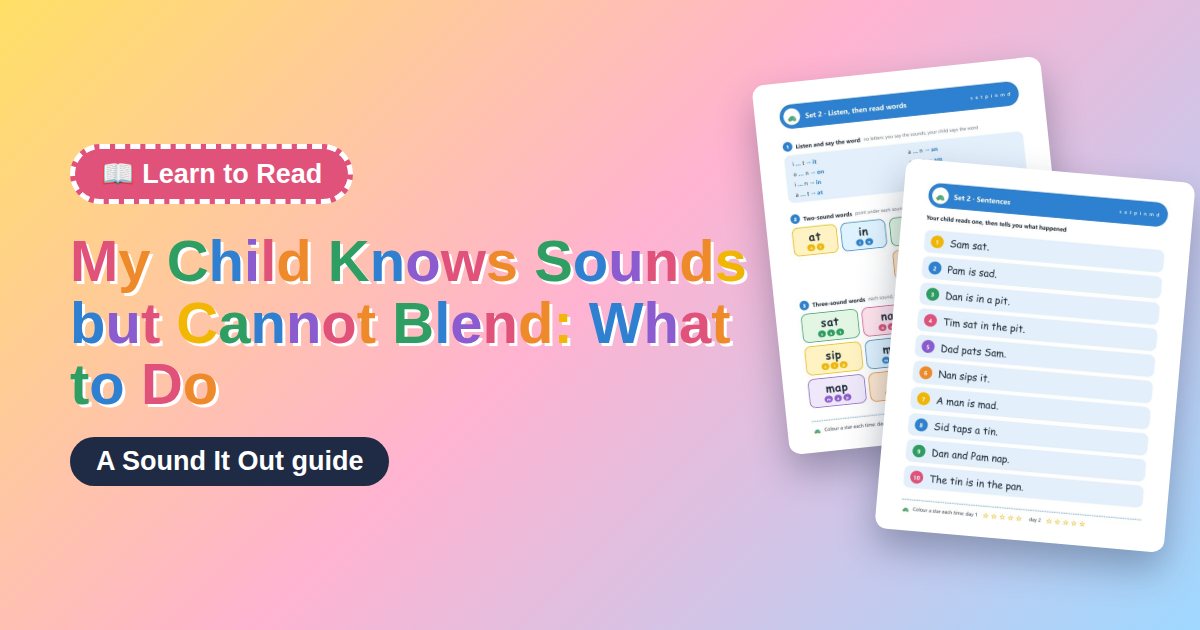 📖 Learn to ReadMy Child Knows Sounds but Cannot Blend: What to Do